
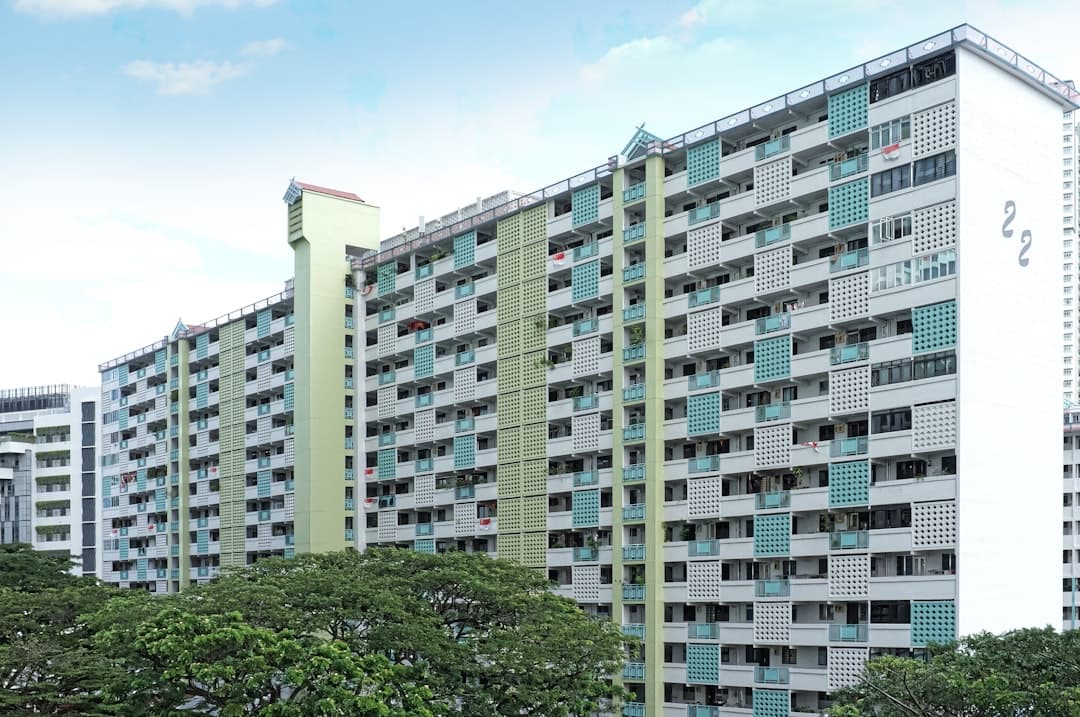
 Photo by Danist Soh on Unsplash
Your Singapore property sits inside a BVI or Cayman holdco: the same structure your family office put in place years ago, built for estate planning or ABSD management across the region. The structure works. The problem appears the moment you need liquidity against the Singapore asset.
Singapore banks lend to Singapore-registered borrowers. When the legal owner of the property is an offshore company, the bank's KYC team and credit policy arrive at the same place: a decline, usually before the credit committee has even seen the asset. It is not a comment on the property's quality; it is a function of how local banks are built.
Rikvin Capital approaches these deals differently. As a direct private lender, we underwrite against the Singapore land title and the beneficial owner behind the structure, not the registered entity name. If the asset is here and the exit is credible, the offshore holding company is rarely the obstacle it appears to be.
Why Banks Decline Offshore-Held Singapore Property
The KYC and policy problem
Singapore's banks are structured to lend to Singapore-registered borrowers. An offshore entity triggers enhanced due diligence requirements that most credit teams are not built to process at the pace a deal requires. The typical outcome is a policy-level decline before the asset is ever reviewed.
TDSR does not apply to Rikvin Capital. We operate as an excluded moneylender under the Moneylenders Act, lending only to accredited investors and corporate borrowers. The TDSR framework that caps bank lending by declared income simply does not apply to our underwriting, whether the borrower is an individual or a holdco.
Offshore structures are often legitimate and well-documented
A BVI or Cayman holdco on a Singapore property is not inherently complex from a lender's perspective. Many foreign investors assembled these structures before they bought here: the holdco was already in place as part of a broader regional portfolio, or the acquisition was completed through an existing corporate vehicle for estate planning purposes. High-value condominiums and commercial properties are the most common collateral we see in these arrangements.
The Singapore land title sits here regardless of who the registered proprietor is. A first charge can be taken over it regardless of where that proprietor was incorporated. That is the security Rikvin Capital lends against.
How Rikvin Capital Underwrites Against an Offshore Holdco
Asset and exit, not corporate form
When a deal reaches Rikvin Capital involving offshore-held Singapore property, two things drive the underwriting decision: the value of the Singapore asset and the credibility of the exit. Can we register a first charge on the land title? Is the exit achievable within 3 to 24 months?
The offshore corporate structure shapes the KYC and documentation process, but it does not determine whether the deal proceeds. We look through the holdco to the beneficial owner: the individual or family behind the structure. Where ownership is clear and source of funds is documentable, the holdco does not block the loan. For a comparable situation in the commercial space, see how we structured a bridging facility for a foreign investor in Singapore commercial property through a similarly layered structure.
What Rikvin Capital needs to proceed
- Land title and encumbrances. We register a first charge on the Singapore land title. An existing mortgage or charge typically needs to be cleared at drawdown.
- LTV up to 70%. Assessed against an independent valuation. Properties in prime districts qualify readily; the ceiling applies regardless of corporate structure.
- Beneficial owner KYC. Certified passport copies, proof of address, and corporate registry extracts for each entity in the ownership chain. A clean two-tier structure is straightforward; multi-layer chains take longer.
- Source of funds. A clear account of where acquisition funds came from. An existing paper trail shortens this step considerably.
- Exit. A sale, a refinance into long-term debt, or identifiable proceeds from a liquidity event. The exit must be credible on a 3- to 24-month timeline.
If you want to understand how Rikvin Capital runs a deal from brief to drawdown, our Singapore lending process page sets it out step by step.
When This Works and When It Does Not
A bridge against offshore-held Singapore property makes sense when:
- The land title is unencumbered, or can be cleared at drawdown
- Beneficial ownership is documentable: one or two individuals, not a contested multi-layer structure
- The exit is confirmed or highly probable within 3 to 24 months
- The borrower qualifies as an accredited investor or corporate entity
It is the wrong tool when the exit is speculative, the ownership chain cannot be documented cleanly, or you need finance for longer than two years. The short tenor compounds the cost of an uncertain exit. If your situation is simpler, our foreigner bridging loan page covers the standard route for non-resident individuals purchasing directly.
Related: the Holland Road residential bridge shows how Rikvin Capital moved quickly on a prime Singapore property when the borrower's bank could not.
Get Funding Approval Within 24 Hours
Speak with our specialists about your bridging requirements.
Frequently asked questions
Article sources1
Rikvin Capital cites primary, authoritative sources to support the information in our articles. The references below link directly to the original material.
- MAS. TDSR framework