
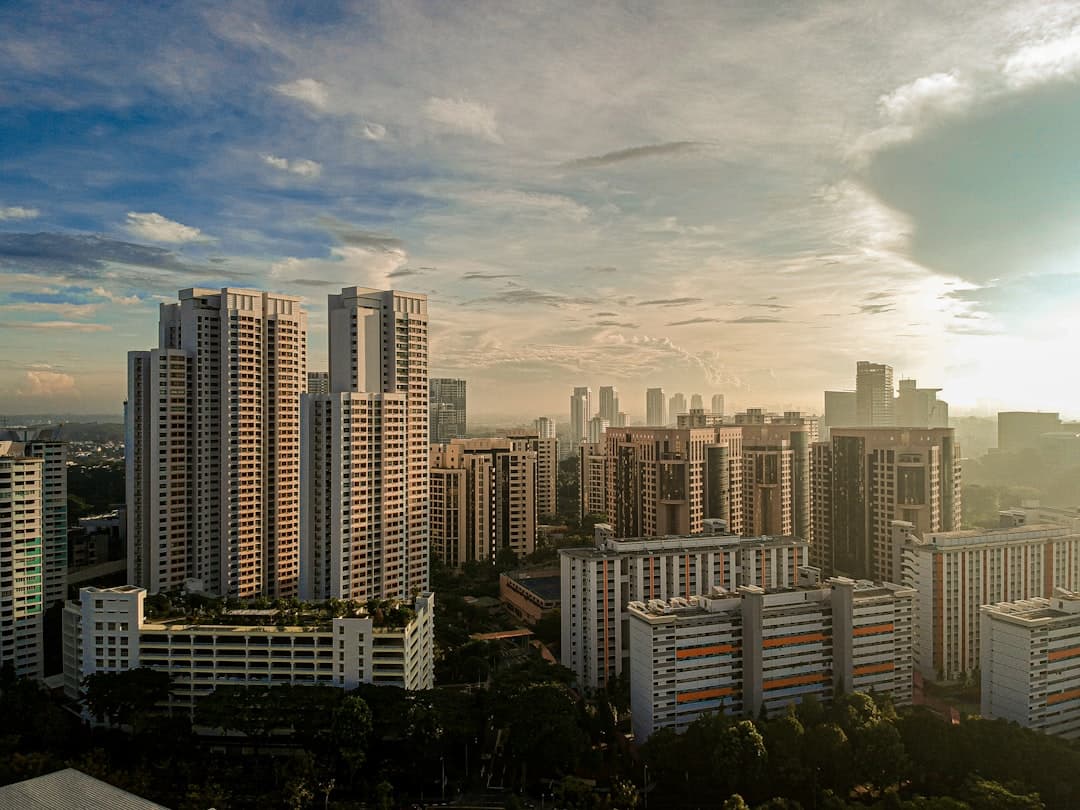
 Photo by Jordan Tan on Unsplash
Your fixed-rate period ends this month. The bank sends its renewal paperwork. You submit the income documents. Then comes the call: your earnings no longer clear the TDSR threshold, and the renewal is declined.
This catches a specific cohort of Singapore property owners off guard: people who retired in the past two years, moved to dividend income after selling a business, or whose household income fell sharply after a divorce. The property is worth far more than the outstanding loan. The mortgage has been serviced without a miss for a decade. None of that changes a bank's income-based stress test.
That is the gap a bridging loan in Singapore is designed to fill: underwritten on the asset and the exit, not on the income statement.
When a mortgage renewal becomes a wall
Banks in Singapore are required to test all new or renewed mortgage facilities against the Monetary Authority of Singapore's TDSR rules. The framework is clear: a borrower's total monthly debt obligations must not exceed 55% of verified gross monthly income. Straightforward enough, until your income changes.
Three situations produce this trap with some regularity. Retirement: CPF contributions stop, monthly income drops sharply, and banks will not count savings or an investment portfolio as qualifying income. Business exit: you sold the company and now live on dividends or passive returns, income that most banks discount heavily or decline to include in full. Divorce: two incomes became one overnight, and the combined debt from any property settlement pushes the TDSR ratio past the limit.
In each case the asset is sound. The property has equity. The mortgage has been serviced on time. But a bank's credit policy treats a renewal almost identically to a new application, and the TDSR framework cannot be waived. You are blocked without having defaulted on a single payment.
What a bridging loan in Singapore actually provides
A bridging loan in Singapore from a direct private lender does not rest on income assessment. Rikvin Capital looks at two things: the property's current market value and the exit, meaning how the loan will be repaid within the agreed term. That exit might be a sale at a market price you control, a bank refinance once qualifying income is restored or properly documented, or proceeds from another asset.
Rikvin Capital operates as an excluded moneylender under the Moneylenders Act and lends only to accredited investors and corporates. TDSR does not apply to our facilities. Indicative loan sizes run from $1M to $100M against Singapore residential and commercial property, with LTV up to 70% and terms from 3 to 24 months. Interest can be structured as monthly payments or rolled up and settled at repayment, suiting borrowers whose cash flow is asset-driven rather than salaried. Indicative bridging loan rates and terms are available for each property type.
For borrowers in the mortgage-expiry trap, the bridge typically covers six to twelve months: enough time to list the property without pressure, wait for a genuine buyer, and complete the sale at full market value. A condominium bridging loan or a GCB bridging loan structured over that window can be the difference between a controlled exit and a sale you regret.
Is a bridge the right tool here, or the wrong one?
A bridge makes sense when the property has clear equity, the exit is credible within 24 months, and the alternative is a forced sale or a default that marks your credit history. It converts a binary problem into a managed timeline.
A bridge is not the right answer when the exit is unclear. If you cannot identify a realistic repayment path within the term, if the property carries little equity, or if the loan quantum falls below $1M, a private bridge is unlikely to be appropriate or cost-effective. Rikvin Capital will not advance against a speculative exit.
The main risk is carry cost. Bridging rates reflect the speed, the flexibility, and the absence of income underwriting; they run higher than a bank mortgage rate. If a sale drags or a buyer withdraws, interest continues to accrue. That is manageable where the equity cushion is solid. Where the borrower is already stretched, it is not.

From enquiry to drawdown
An initial conversation with our team takes under an hour. We need the property's estimated market value, the outstanding loan balance, and a clear statement of the intended exit. From that, an in-principle term sheet comes back typically within 24 hours.
Formal drawdown, including legal work, independent valuation, and KYC, typically completes in two to three weeks. Where the refinance deadline is immediate, transactions have settled within seven days when the security and exit are well defined. The Holland Road residential bridge is a recent example of a fast-close deal completed under exactly that kind of time pressure.
Once drawn, the proceeds repay the existing bank mortgage, the property refinances onto the private facility, and you have a clear window to execute your exit without the pressure of an expiring bank term. More detail on each stage is on the lending process page.
Get Funding Approval Within 24 Hours
Speak with our specialists about your bridging requirements.
Frequently asked questions
Article sources1
Rikvin Capital cites primary, authoritative sources to support the information in our articles. The references below link directly to the original material.