
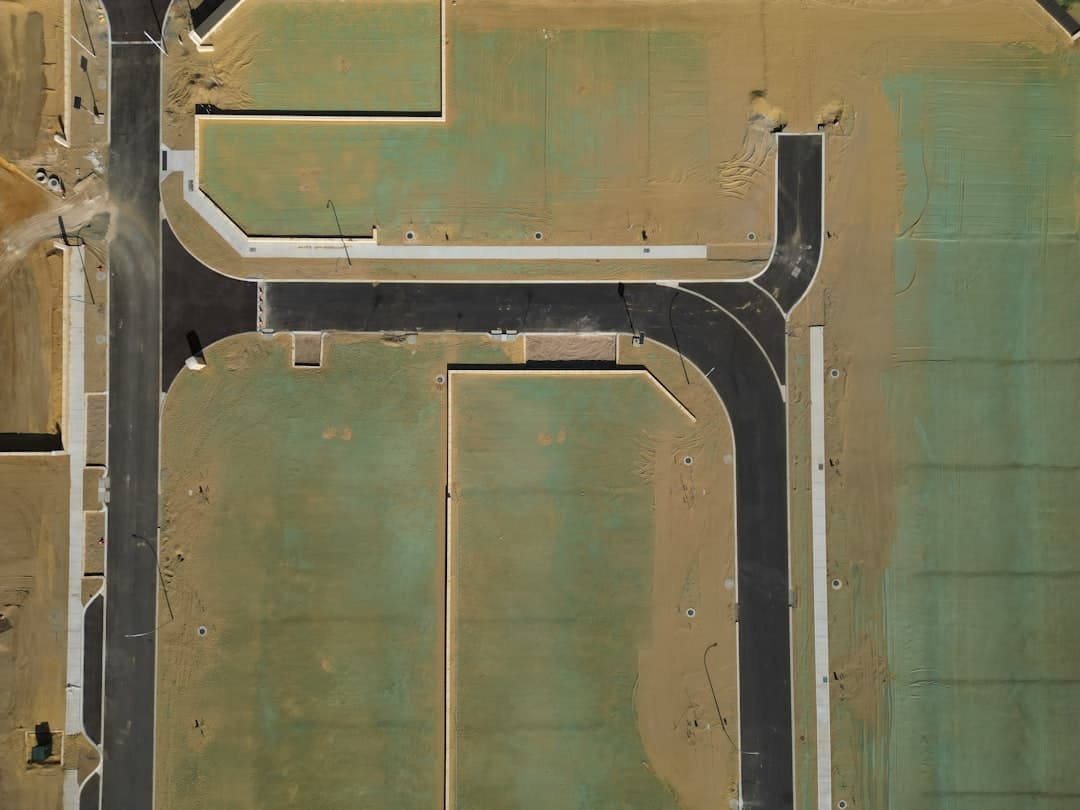
 Photo by Iain on Unsplash
You have found the site. The seller wants to exchange in four weeks. Your bank, even if willing, cannot complete land underwriting in that window, and most mainstream lenders will not lend on bare land at all.
The problem is income. Banks need a rent roll, a tenancy schedule, something to service the debt. A cleared plot produces nothing. That structural mismatch is not a temporary credit condition; it is how mainstream property lending is built.
Bridging finance for land purchase exists precisely because of this gap. A private lender underwrites against the asset's current market value and a credible exit, not a rent cheque. If the exit stacks up, with planning already in hand and a development loan ready to draw, or a ready buyer at a higher price, the deal can complete in weeks.
Why Banks Step Back From Bare Land
A bank's credit model is built around debt-service coverage: can the asset's income repay the loan? A tenanted office can. A completed flat with a lease can. A cleared plot cannot.
In Singapore, residential lending is further constrained by the TDSR framework, which means the borrower's declared income (not the land's value) is the primary gating factor. For a developer acquiring a GCB plot or an en-bloc site, that test rarely works in their favour.
In the UK, some commercial lenders will consider bare land, but typically at sub-50% LTV and with a process that takes months. That timeline is incompatible with an exchange deadline or a competitive off-market opportunity.
How Private Lenders Underwrite a Land Bridge
The underwriting question shifts from "what income does this produce?" to "what is this land worth today, and how does the borrower exit?"
Current market value, not hope value. We lend against the site's value as it stands, not its projected value once planning is granted or the development completes. If a plot carries outline planning and is worth $8M in Singapore today, the loan is sized against $8M. If planning has not yet been granted, the current use value governs. This distinction matters: it is the most common source of misaligned expectations between developers and private lenders.
Exit route one: planning secured, development finance drawn down. The borrower acquires the site, secures planning consent, then refinances into a development or construction loan. This is the most common path. It requires an honest assessment of how long the planning application will take relative to the loan term. Our article on why planning status is your lender's first question covers the underwriting logic in detail.
Exit route two: onward sale to another developer. The borrower buys the site intending to sell it on, typically with a planning uplift or as part of an assembled parcel. The exit depends on finding a buyer at the right price within the loan term. A realistic view of the buyer market is essential: "another developer will want this" is not an exit; a named counterparty or a credible comparable is.
If you have a site in view and a clear exit in mind, send us the site details and we will assess it within 24 hours.
Singapore and the UK: the Same Logic, Different Context
The underwriting mechanics of bridging finance for land purchase are consistent across both markets. The local rules change the practical calculus.
Singapore. The scarcest commodity is not capital: it is buildable land. GCB plots, URA conservation zones, and en-bloc sites operate in a narrow market where speed determines whether you secure the site at all. TDSR does not apply to our lending (we are not a bank), so the decision turns on the asset and the exit. A Singapore bridging loan for land is available to accredited investors and corporates; LTV up to 70% against current market value, indicative and subject to valuation and due diligence.
United Kingdom. Development land is more liquid but equally time-sensitive. Stamp Duty Land Tax adds to the day-one cost, and the planning system runs on its own schedule regardless of the deal's urgency. For a developer bridging a land purchase ahead of a planning decision, pre-application advice from the local planning authority is the clearest signal that the exit is credible. Our UK commercial bridging loan for land runs to 75% LTV against current market value.
When a Land Bridge Is Not the Right Tool
Short tenure and higher cost mean a land bridge suits one situation: speed is the constraint and the exit is clear.
It is the wrong tool when:
- The only viable exit depends on planning being granted, and the current-use value alone does not support the loan.
- The hold period needed exceeds 24 months.
- The LTV required can only be justified by post-planning value, which asks the lender to absorb planning risk.
- The borrower has no development track record and no clear advisory team to execute the exit.
Identifying those gaps before the option lapses is always more useful than discovering them mid-process. If you are not sure where your site sits, talk to our team before committing to any fees or deadlines. Related: how we structured a Singapore site acquisition at Binjai Park.
Get Funding Approval Within 24 Hours
Speak with our specialists about your bridging requirements.
Frequently asked questions
Article sources3
Rikvin Capital cites primary, authoritative sources to support the information in our articles. The references below link directly to the original material.
- MAS. the TDSR framework
- URA. URA conservation zones
- GOV.UK. Stamp Duty Land Tax