
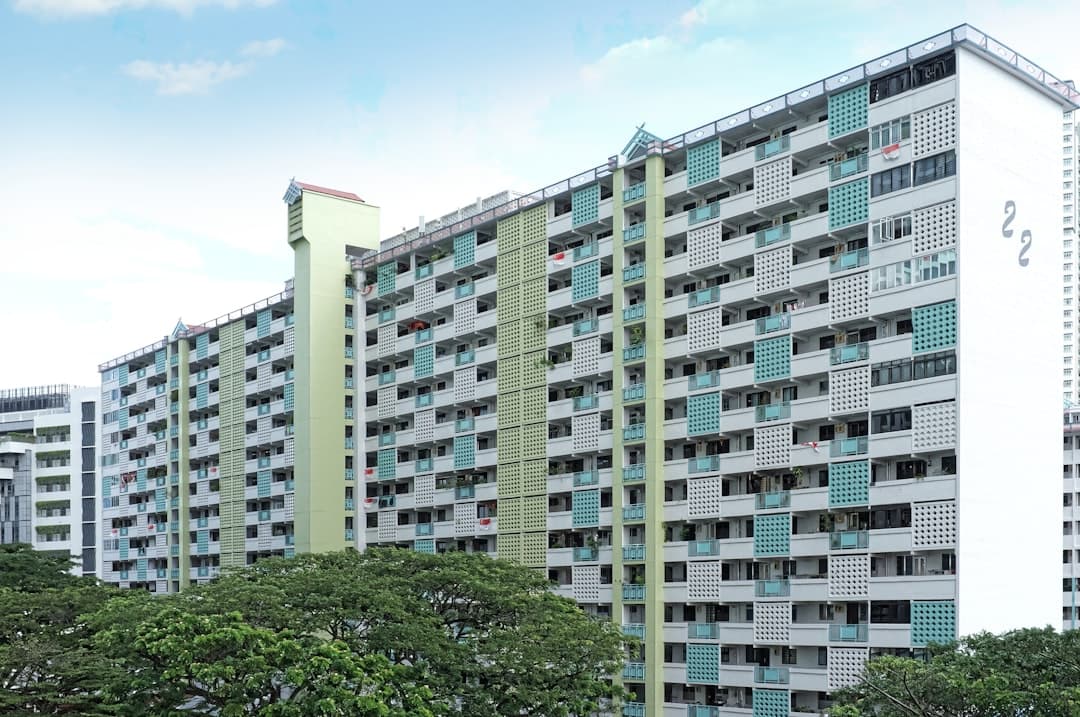
 Photo by Danist Soh on Unsplash
You've signed the OTP on your next property. The completion window is running, and the funds need to be in place. Your existing home hasn't sold yet.
This is the situation most Singapore upgraders face. Whether you're moving from a Tanjong Pagar condo to a landed property in Bukit Timah, or crossing districts for a larger unit before your family grows, the sequencing rarely works out neatly. Sale completions slip. Ideal replacements appear ahead of schedule.
A home bridging loan in Singapore is built for exactly this gap. It lets you complete the new purchase using equity from your existing property, then repays in full when that existing home closes its sale.
The completion window: OTP mechanics and the funding gap
When you exercise an Option to Purchase on a Singapore private residential property, you lock in the price and start the clock. Completion of a private property transaction typically runs 8–12 weeks from exercise: time for CPF approvals, conveyancing, and a bank drawdown, assuming those funds are already in place.
Most upgraders don't have them in place. Your existing home may be on the market, may even have a buyer at heads of terms, but its sale completion often lags behind the new purchase by weeks or more. The equity is there on paper. Getting it into your account in time is a different matter.
Only part of that equity can be released, though. Take a $3.5M new purchase with $1.2M still outstanding on your existing $2.8M property: a first-charge facility at 70% LTV gives $1.96M, and the existing bank loan is redeemed out of that, leaving roughly $0.76M of cash in hand. That figure, not the headline equity, sets the ceiling on what a bridge can cover.
Why your bank can't help
Singapore's Total Debt Servicing Ratio framework caps total monthly debt obligations at 55% of gross monthly income. When your existing mortgage sits inside that calculation, there is little headroom left for a loan on the new property, even for borrowers whose net worth runs well into eight figures.
The LTV cap compounds it. A second outstanding housing loan is limited to 45% of the new property's value, so the bank route leaves a gap on both tests at once: the amount you can borrow and the income needed to service it. This is not a question of creditworthiness. It is a structural rule applied uniformly, regardless of how clear the exit looks or how substantial the equity.
Private lenders are not bound by TDSR. As a direct private lender to accredited investors, Rikvin Capital underwrites against the asset and the exit: the value of the existing property, the contracted sale, and the timeline. Income-based tests don't apply.
How a home bridging loan in Singapore works
The structure is straightforward. Rikvin takes a first charge over your existing property and lends against a portion of its equity, up to 70% LTV indicative, as a short-term facility. Where a bank mortgage is still outstanding, it is redeemed on drawdown so that the charge ranks first.
Interest rolls up during the loan term, so there are no monthly payments to service. When the existing property completes its sale, the proceeds repay the bridge in full.
An indicative term sheet reaches you within 24 hours of providing the property details, subject to initial review. Drawdown typically follows in about two weeks, inside the standard OTP completion window. Where timing is critical, request indicative terms before your OTP exercise deadline to confirm the facility is in place.

On a $1.5M bridge at indicative rates over three months, the all-in cost is a fraction of the ABSD already paid on the new purchase, and considerably less than forfeiting the OTP deposit and starting the property search again.
The facility works across the residential spectrum: a condo owner in Novena moving to a landed property in Serangoon, or a borrower in Holland Road bridging into a GCB across the district. The mechanics are the same in both cases. See how a comparable structure was deployed in the Holland Road prime residential case study on the Rikvin Capital portfolio.
When a bridge loan is the right tool, and when it is not
A home bridging loan in Singapore suits the upgrade scenario well when three conditions hold. First, the existing property carries enough unencumbered equity to support the required LTV once the existing mortgage is redeemed. Second, there is a clear exit in view: an OTP exercised by a buyer on your existing home, or at minimum a realistic and imminent sale timeline. Third, you qualify as an Accredited Investor under the Securities and Futures Act.
It is not the right structure if your existing home has not yet been marketed, if the outstanding mortgage leaves insufficient equity, or if the exit depends on a speculative chain rather than a contracted buyer. In those cases, restructuring the sequence and completing the sale before exercising the OTP is often cheaper than carrying open-ended bridge interest.
The primary risk is exit slippage. If your existing sale delays because a buyer withdraws or a legal issue surfaces, the bridge may need extending. Extensions cost more. The fix: build a buffer into your original tenor, and be realistic about your sale timeline before drawing down. If you're unsure whether your existing equity supports the required LTV, outline your position to the team for an early assessment.
Borrowers considering a condominium bridging loan or a bungalow bridging loan should apply the same test: the cleaner the exit, the sharper the terms.
Singapore upgraders caught between two completions don't need a general-purpose loan. They need a facility sized to the gap, structured against the equity they already hold, and designed to discharge the moment the sale closes.
Get Funding Approval Within 24 Hours
Speak with our specialists about your bridging requirements.
Frequently asked questions
Article sources1
Rikvin Capital cites primary, authoritative sources to support the information in our articles. The references below link directly to the original material.