
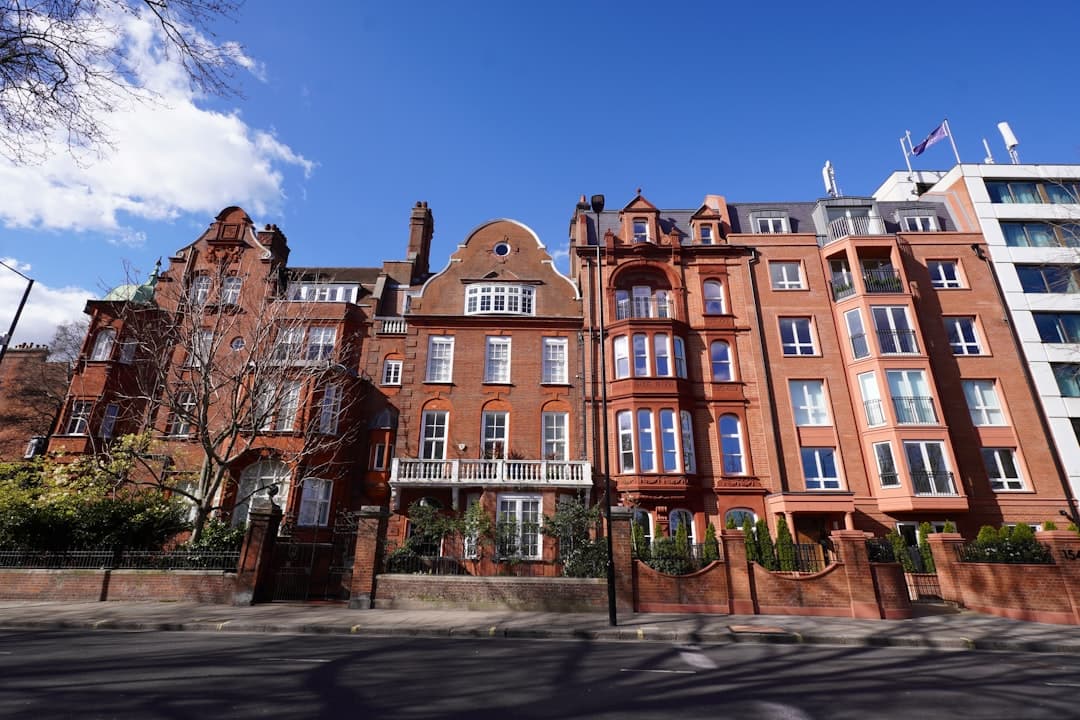
 Photo by Brett Wharton on Unsplash
You receive a term sheet: 0.85% per month, 75% LTV, nine-month term. Your mortgage back home runs at 3% or 4% a year. Multiply 0.85 by twelve and you get 10.2%. That is a starting point, not the answer.
One point before the arithmetic. The 0.85% per month used throughout this piece is an illustrative figure chosen to make the maths legible, not Rikvin Capital's pricing, and the 1–2% arrangement fee and 1% exit fee referred to below are general market examples rather than Rikvin terms.
The monthly rate is only the running cost. Arrangement fees, exit fees, the mechanics of rolled-up compounding, and the gap between the gross loan and what actually lands in your account each affect the total. A buyer comparing a UK bridging loan interest rate against a Singapore or Hong Kong facility quoted on annual simple interest is not making a like-for-like comparison until they have worked through each element.
This piece sets out what a UK bridging term sheet actually costs in cash terms, so you can judge the quote on your desk.
What the Monthly Rate Actually Compounds To
UK bridging lenders quote interest monthly. That is the market convention here, unlike residential mortgages where lenders must express cost as an APR. The Bank of England base rate informs what lenders pay for their own funds, but bridging rates are priced on risk, LTV, and deal complexity rather than as a fixed spread to base. When interest is rolled up (the standard arrangement on a bridging facility), each month's accrued interest is added to the outstanding balance before the next month's charge is calculated.
The compound effect is modest over a short term but worth modelling. On an illustrative £2 million loan at 0.85% per month, nine months of simple multiplication gives £153,000. Applying compound arithmetic: 1.0085 raised to the ninth power, minus 1, applied to £2,000,000 gives approximately £158,000. The difference is around £5,000 on a £2 million loan over nine months. Not the dominant cost, but a real one. Over a twelve-month term the gap widens.
The annualised equivalent of 0.85% per month, compounded, is approximately 10.7% per year. A borrower benchmarking against a Hong Kong or Singapore product quoted on annual simple interest should use that figure, not 10.2%, as the starting comparison.
The Fees That Sit on Top
The monthly rate is the running cost. Three further charges determine what you pay in total. The figures below are market examples, not Rikvin pricing.
Arrangement fee. Most UK bridging lenders charge 1–2% of the gross loan as a facility or arrangement fee, typically deducted from the first drawdown. On a £3 million facility at 1.5%, £45,000 is taken on day one. You pay interest on £3 million but receive £2.955 million. That gap is a real cost and belongs in any comparison of competing offers.
Exit fee. Some lenders charge a fee on redemption, commonly 1% of the outstanding balance. Others do not. On a £3 million loan, a 1% exit fee adds £30,000 to the total at repayment. It is one of the first questions to put to any lender: does an exit fee apply, and is it calculated on the original loan amount or the balance at redemption (which includes rolled-up interest)?
Legal and valuation costs. UK practice requires borrowers to pay both their own solicitor and the lender's legal team. On a straightforward London first charge, lender legal fees on a standard transaction run to a few thousand pounds. On more complex structures (involving offshore companies, multiple titles, or overseas borrowers requiring enhanced KYC), they can be higher. Budget for both sides of the table, plus a RICS valuation commissioned by the lender and paid by the borrower before any interest accrues.
To model the all-in cost of a specific facility before you receive a formal term sheet, speak to our team.
How Rolled-Up Interest Lands at Redemption
Rolled-up interest means you make no monthly payments during the term. Interest accrues month by month, is added to the principal balance, and is repaid in full when you exit: through a property sale, a refinance onto a term mortgage, or another approved exit route. For a buyer who is not generating rental income from the security, this structure is practical: no cash outflow between drawdown and redemption.
The implication is that the redemption figure is larger than the original loan. On the illustrative £2 million bridge at 0.85% per month, rolled up for nine months, the repayment in principal and interest is approximately £2.158 million, before any exit fee. If the exit takes longer than planned, that balance continues to grow. Most lenders apply a higher default rate once the agreed term expires: a clause to read carefully in any UK bridging term sheet.
For a detailed look at how redemption and the wider process work on a standard deal, the UK lending process guide covers each stage from valuation instruction to title discharge.
When a Bridge Is the Right Tool, and When It Is Not
A UK bridging loan is an asset-backed facility: the lender underwrites against the property and your exit strategy, not your income. There is no income-based affordability test that gates the loan size, and credit scoring is not the main test, though KYC and background checks always apply. For borrowers familiar with Singapore's Total Debt Servicing Ratio or Hong Kong's mortgage stress tests, this is a meaningfully different underwriting approach. It is why the product suits foreign nationals who cannot easily evidence UK income: see also our article on why UK banks decline foreign nationals seeking short-term property finance.
Typical borrowers are high-net-worth individuals, family offices and corporates.
The cost, though, is what it is. A bridging interest rate in the range that UK lenders offer is materially more expensive than a long-term mortgage. The product makes sense when the timeline is under 24 months, the exit is clearly defined, and the total cost of the bridge is lower than the cost of missing the transaction. It is the wrong tool when the exit is speculative, the LTV is at the ceiling with limited buffer, or the intention is a multi-year hold. A bridge that extends into a second bridge is expensive: model the exit before you draw.
Our case study on the prime Hampstead bridge sets out how the facility was structured, the security taken, and the exit the borrower used.
Get Funding Approval Within 24 Hours
Speak with our specialists about your bridging requirements.
Frequently asked questions
Article sources1
Rikvin Capital cites primary, authoritative sources to support the information in our articles. The references below link directly to the original material.