
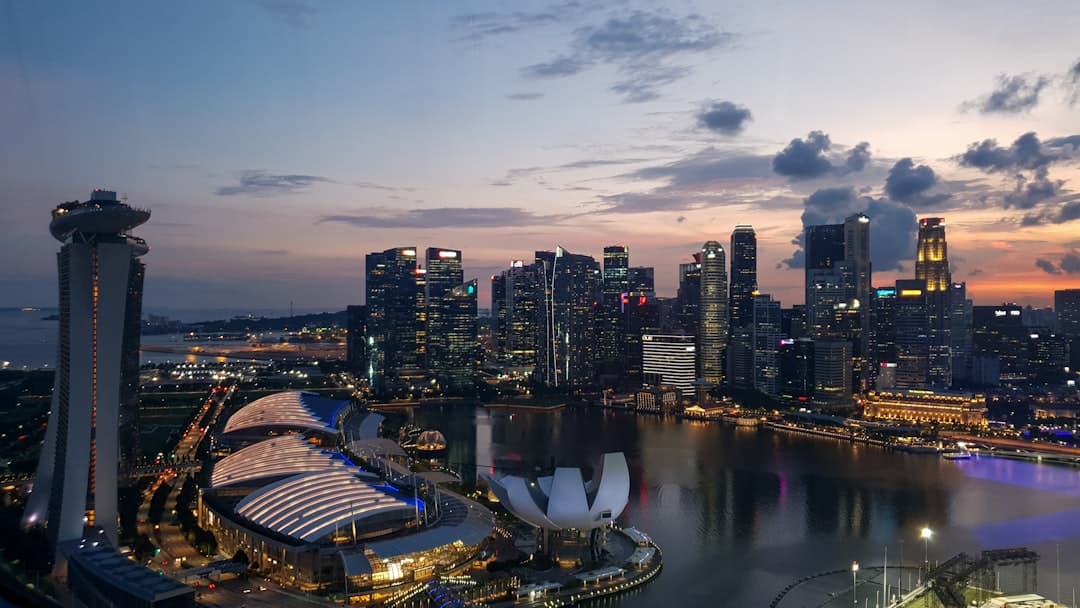
 Photo by Jisun Han on Unsplash
You wound down the business three years ago. The Good Class Bungalow in Bukit Timah, purchased in 2015 and now worth considerably more, needs refinancing. When you approach your bank, the credit team politely explains that your $10,000 monthly director fee and variable dividends sit well below the qualifying income threshold.
This is not an isolated scenario for Singapore's semi-retired HNWIs. The gap between what you own and what a bank will advance against it is not a reflection of your financial position. It is a product of how the income-verification side of property lending was designed.
A bridging loan in Singapore is often the right answer here, not a workaround but the correct instrument for a borrower whose case turns on asset quality and exit credibility rather than income documentation.
Why TDSR leaves asset-rich retirees behind
The TDSR framework, introduced by MAS in 2013, caps total monthly debt repayments as a proportion of a borrower's verified gross monthly income. The intent was to prevent overleveraging. For salaried employees with payslips and CPF records, it does what it was designed to do.
For the semi-retired, the frame breaks. Banks treat dividend income, director fees, and investment distributions as variable. Most apply a meaningful haircut before such income counts toward the ratio. A borrower drawing $200,000 per year in dividends may find the qualifying income supporting a new facility is substantially lower. Not because the income is unreliable, but because the verification model was not built for it.
The result: a property owner with $15M in net assets and a clear exit can be declined. The credit refusal is a documentation problem, not a creditworthiness one.
What is a bridging loan in Singapore
A bridging loan is a short-term, asset-backed facility. It provides capital now, repaid when a defined exit event occurs: a property sale, a refinancing, a business distribution, or the completion of a longer-term arrangement. Terms typically run three to twenty-four months.
The lender, a private lender operating as an excluded moneylender under the Moneylenders Act rather than a bank, takes a first charge on the property. Underwriting centres on the loan-to-value ratio, asset quality, and exit credibility. Income is reviewed but does not function as the primary gating criterion.
This is why a GCB bridging loan or other Singapore property bridge works where a bank mortgage does not for the semi-retired borrower. The question shifts from "what is your monthly salary?" to "what is the property worth, and how does the loan come off the books?" For an HNWI with a strong asset and a clear plan, those are more tractable questions. If you are already researching this route, our lending process explains what we assess and what documentation to prepare.
The exit: what replaces a payslip
Every bridging loan needs a credible exit, the event that repays the facility at maturity. For the semi-retired borrower, the exits that work tend to fall into a few categories.
- Property sale. The borrower intends to sell the bridged asset or another property within the term. Completion proceeds repay the facility.
- Refinancing. A conventional refinance becomes viable once documentary hurdles are cleared, the borrower's income profile is restructured, or TDSR constraints ease.
- Asset or business realisation. Investments, a company distribution, or the proceeds of a business sale will arrive within the loan period.
- Holding structure restructure. An SPV or family holding company reorganisation is underway; the bridge buys time for it to complete.
These exits map to most of the deals in our Singapore portfolio. A strong exit converts an otherwise blocked deal into a straightforward one. Related: see how Rikvin structured finance for a prime Singapore property when conventional channels were closed.
When a bridge is right and when it is not
A bridging loan is the right tool when the asset is strong, the exit is clear and near-term, and the primary obstacle is the bank's income framework rather than the borrower's underlying creditworthiness.
It is the wrong tool when there is no credible exit within the term. Bridge finance costs more than a bank mortgage. That premium compensates for speed, flexibility, and the absence of TDSR constraint. If the plan is indefinite hold with no sale or refinancing event in view, the economics do not stack up.
It is also the wrong tool if the required advance exceeds 70% of the property's assessed value. LTV is the discipline that makes the product work: a lender that ignores it absorbs the borrower's risk.
Borrowers who find themselves here often face a related challenge: an expiring Singapore mortgage that TDSR blocks renewing. That situation has similar mechanics and is worth reading alongside this one.
Get Funding Approval Within 24 Hours
Speak with our specialists about your bridging requirements.
Frequently asked questions
Article sources1
Rikvin Capital cites primary, authoritative sources to support the information in our articles. The references below link directly to the original material.
- MAS. The TDSR framework