
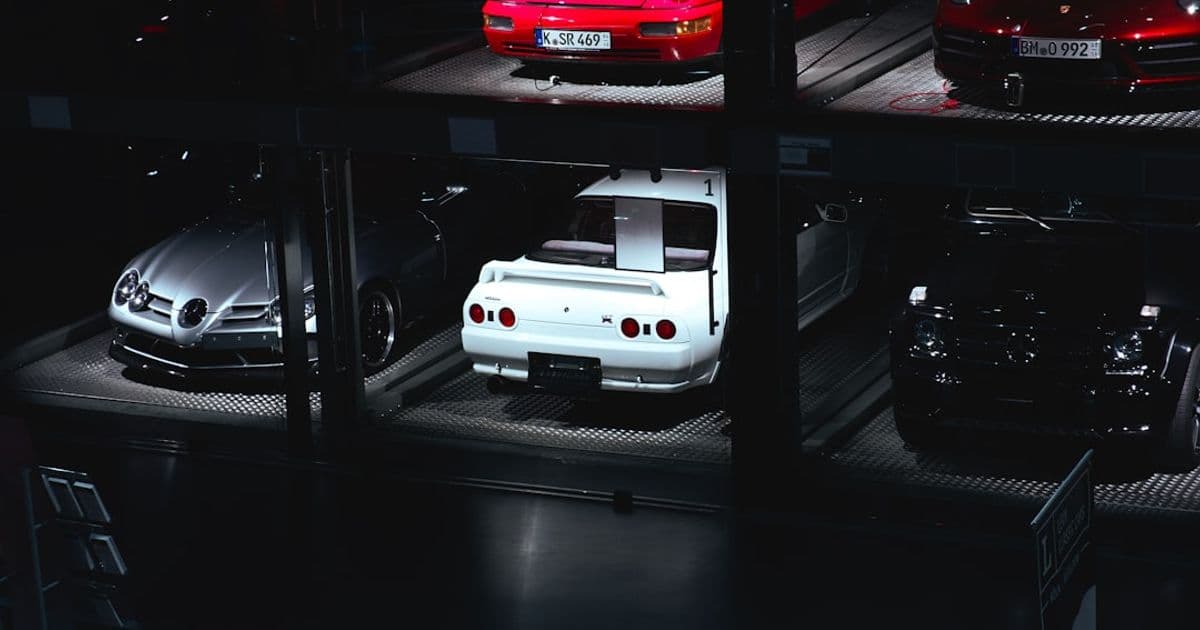
 Photo by zero take on Unsplash
A supercar in a Singapore bonded warehouse sits in a peculiar position. The car is real, the title is yours, and the value is substantial. But until it clears customs and completes registration, incurring COE, ARF, and GST, it exists in fiscal limbo. Most banks will not touch it as collateral.
Collectors who have parked capital in a Ferrari, McLaren, or Rolls-Royce through bonded storage face a familiar frustration: an asset worth several hundred thousand to several million dollars that cannot be easily monetised. You can sell it, or you can register it and absorb the full duty cost. Neither option suits every timeline.
A bridging loan in Singapore, structured by a private lender against the vehicle, opens a third path. Rikvin Capital lends against the asset and the exit strategy, not against income and not subject to TDSR. A stored, unregistered supercar can qualify as collateral for clients who meet our borrower criteria.
Singapore's bonded warehouse ecosystem for high-value cars
Singapore's Free Trade Zones allow vehicles to be imported and held under customs control without triggering the full registration cost. COE, Additional Registration Fee, and GST combined add considerably to the base value of any premium vehicle; for a multi-million-dollar import, that arithmetic makes bonded storage a deliberate holding position rather than an oversight.
Collectors, traders, and investors use this route to hold cars for resale, export, or deferred registration. Wearnes Automotive, one of Singapore's most established prestige automotive groups, handles marques including Bentley and Jaguar Land Rover through the city-state's regulated import and distribution channels. Specialist FTZ storage operators in Jurong Port and Pasir Panjang serve the logistics side, offering climate-controlled, insured facilities for high-value vehicle inventory that has not yet formally entered the customs territory.
The result is a class of assets that are legally owned, physically secure, and worth substantial money, yet routinely overlooked by conventional lenders who demand registered, income-producing collateral. That gap is precisely where private credit fits.
How Rikvin structures a bridging loan against a bonded vehicle
The starting point is valuation. For a bonded car, we work from the vehicle's current open market value in its unregistered state: the price a buyer in the global secondary market would pay today, not the Singapore registered price with COE layered on top. We commission an independent appraisal from a qualified automotive specialist before making an offer.
Indicative LTV is up to 70% of that appraised value, subject to the vehicle's marketability, the quality of storage and title documentation, and standard due diligence. For a car appraised at $3M, that translates to indicative lending of up to $2.1M, though each deal is assessed on its own facts. Our funded portfolio shows the kinds of high-value, time-sensitive deals we have closed, including transactions where the collateral sat well outside conventional property categories.
The exit matters as much as the entry. We lend on terms of 3 to 24 months, so the borrower needs a credible plan: a confirmed buyer, a planned registration and resale, or a re-export contract. We do not lend against a vehicle with no realistic monetisation path.
As a direct private lender operating as an excluded moneylender under the Moneylenders Act, Rikvin is not bound by the MAS Total Debt Servicing Ratio framework that governs bank lending. We underwrite the asset and the exit, which is precisely the approach a bonded supercar requires.
When this structure makes sense, and when it does not
The right borrower profile is narrow but specific. A collector who has committed capital to a vehicle purchase and needs liquidity before a property deal completes fits the model well. So does one who wants to deploy cash into another opportunity without liquidating a trophy asset. A borrower with no plausible exit timeline, or a vehicle with a thin secondary market, does not.
The main risk is straightforward. If the exit takes longer than the loan term, or if the vehicle's appraised value declines materially between origination and redemption, the borrower may face an extension request or a funding shortfall. A supercar does not generate rental income to service rolling interest. Understanding that constraint matters before you discuss your specific structure with our team.
Where the deal stacks up, the speed advantage is real. A Singapore bridging loan from Rikvin can have an in-principle term sheet within 24 hours and drawdown in two to three weeks. For collectors exploring a range of bridging loan structures across different asset types, the same asset-first underwriting applies throughout.
Get Funding Approval Within 24 Hours
Speak with our specialists about your bridging requirements.
Frequently asked questions
Article sources1
Rikvin Capital cites primary, authoritative sources to support the information in our articles. The references below link directly to the original material.